Automotive
A guide to switching to waterborne basecoat
Booth, equipment, storage and application habits: how to move your shop to waterborne basecoat without trouble.
Short answer
Drying is the critical point when switching to waterborne basecoat: water only leaves quickly with the right temperature and enough air movement. Booth airflow, air blowers, a stainless spray gun and frost-free storage must be ready. Mixing, application and flash-off habits change, and training the team makes the switch easier.
1Why waterborne basecoat?
In refinishing, the basecoat is the layer that carries the colour and the effect; a clearcoat goes on top. Solvent-borne basecoats contain a high share of volatile organic compounds (VOC). Once rules such as the European Union’s Directive 2004/42/EC limited the VOC of this layer, waterborne basecoats became the standard in many markets.
Waterborne systems reduce solvent odour and emissions in the shop. Current waterborne basecoats compete with solvent-borne systems on colour accuracy and hiding; the real difference is in application and drying.
2The booth and drying
Water evaporates more slowly than solvent and is sensitive to humidity. That is why the wait between coats (flash-off time) depends on air movement as much as on temperature. Balanced airflow in the spray booth, plus blower guns or fixed air-movement systems aimed at the panel, shortens the wait noticeably.
- Check booth filters and airflow regularly.
- Get air blowers that direct air at the surface before you switch.
- Keep booth and product temperature within the maker’s recommended range.
3Spray gun and equipment
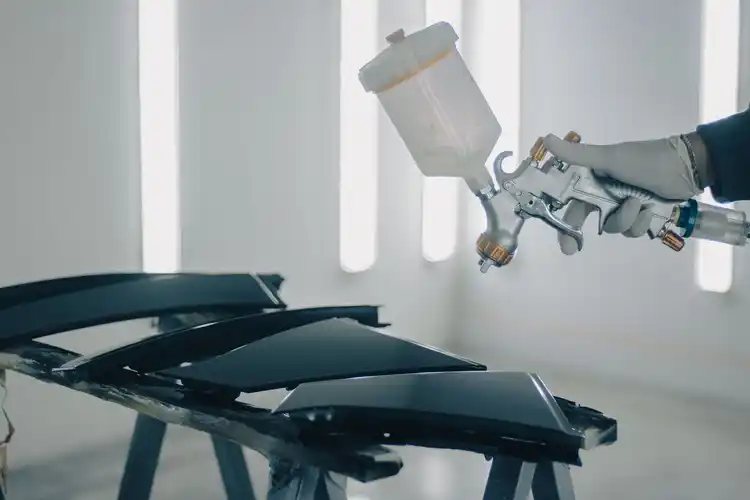
Waterborne products can corrode metal parts that the paint touches. The gun’s fluid passages must be stainless steel and the gun must be stated as suitable for waterborne products. Keep mixing cups, strainers and measuring sticks for the waterborne system only.
Clean with gun-wash equipment and cleaners suitable for waterborne products. Collect waterborne waste separately from solvent waste and dispose of it according to local regulations.
4Storage and mixing
Waterborne products are sensitive to frost. Frozen product is ruined and cannot be used, so the store must stay above the minimum temperature the maker gives throughout the winter. Close opened tins tightly and keep an eye on shelf life.
Mix to the maker’s formula and ratios. Never add solvent-borne additives to a waterborne basecoat; reduce only with the reducer the system specifies.
5What changes in application?
- Surface preparation
The surface must be cleaner than ever. Silicone and grease residues can cause craters in waterborne basecoat; use a suitable degreaser and a tack cloth.
- Applying coats
Most waterborne systems apply a light coat after the colour coats to even out the effect. Follow the product’s TDS for the number of coats and gun settings.
- Flash-off
After each coat, blow air over the surface until it looks matt and even. Spraying onto a wet coat causes runs and clouding.
- Clearcoat
Once the basecoat is fully matt, apply a clearcoat compatible with the system. The clearcoat can be solvent-borne; follow the maker’s compatibility advice.
Check colour more often in the first weeks after switching. The difference between the wet and dry shade may not be what you are used to; always judge colour on a dried test card.
The switching plan
- Assess where you are
Check booth airflow, the compressor and air quality, and storage conditions.
- Complete the equipment
Get stainless guns, air blowers, a suitable gun-wash unit and separate mixing supplies.
- Train the team
Let the painters work with the new system on test panels.
- Start step by step
Begin with small repairs, then move all work to the new system.
Browse the brands on our Automotive Refinish page for mixing systems, equipment and training, or talk your switching plan through with our technical team. For colour checks, see our colour matching guide.
Frequently asked questions
Does waterborne basecoat dry more slowly?
Without air movement, yes. With proper airflow and blowers, the time between coats comes close to that of solvent-borne systems.
Can I use my existing spray gun?
If its fluid passages are not stainless steel there is a risk of corrosion. Use a gun the maker states is suitable for waterborne products.
What happens if waterborne basecoat freezes?
Frozen product breaks down and cannot be used. Protect storage and transport against frost.
Does the clearcoat have to be waterborne too?
No. A two-component solvent-borne clearcoat usually goes over a waterborne basecoat. Use the clearcoat the system recommends.